Search This Blog

Medical Research Updates

Search BREAST CANCER, on this site, for around the world cutting - edge research and treatment findings as they are published
Showing posts with label H1N1. Show all posts

Saturday, November 28, 2009

H1N1 Around The Globe


Reports from around the globe indicate that H1N1 is not going away any time soon.

Although it appears from available health reports that spread of H1N1 continues to be a very real concern,at least for the moment it is under control.The largest fear is the strain will mutate and fail to respond to the current vaccine.

Animals have been reported to already have contracted H1N1 most unexpectedly a cat and the concern is that the virus will mutate through this vector.

The following are headlines from around the world regarding the present status of H1N1. Remaining informed is our best defence.

cbruce


Suspension of classes decreased spread of new flu in 21%, says survey


Work was published in the journal BMC Infectious Diseases'.

Analysis showed that the number of close contacts decreases by 10%.


Changes in the new flu virus killed two people in France

This is the same mutation identified in Norway.

WHO maintains that drugs are still effective

20 NOVEMBER 2009

GENEVA -- The Norwegian Institute of Public Health has informed WHO of a mutation detected in three H1N1 viruses. The viruses were isolated from the first two fatal cases of pandemic influenza in the country and one patient with severe illness.


Brazilian and Venezuelan Yanomami cut relations because of the new flu.


Government of Venezuela has confirmed eight deaths from the disease among Indians.


Fearing infection by influenza virus A (H1N1), the Brazilian Yanomami Indians avoid visiting their relatives in the villages of Venezuela. According to the Indian leader Davi Yanomami, two weeks ago, the Indians Platanal in southern Venezuela, sent many messages that they were already infected by the disease in the neighboring country.

H1N1 strikes Yanomami people in Venezuela


CARACAS, Venezuela, 4 Nov 2009 (AFP) - The H1N1 flu has affected the indigenous Yanomami, on the border between Venezuela and Brazil, the government of Caracas sent on Wednesday, a delegation of the Ministry of Health to the site.


Death rises to 86 in number  by the new flu in Ukraine


Number of patients rose to 478 thousand.
Daily, the country registers between 70 thousand to 80 thousand new cases.


Health authorities of Ukraine reported on Wednesday (4) that 86 people died of influenza and other respiratory problems in recent weeks, so the football match in the Champions League on Wednesday in Kiev will distribute masks to try to minimize exposure.

According to the head of the Ukrainian health, Ludmila Mujárskaya, the number of patients rose to 478 thousand, Ukrainian news agencies.
Daily, the number of infected people rises 70 thousand to 80 thousand.


A cat in the state of Iowa has been infected by the virus A (H1N1),

 the first time a cat is diagnosed with a new strain, said the American Association of Veterinary Medicine on Wednesday .


The cat of 13 years apparently contracted the virus from one of the residents of the house, the group said in a statement. The animal recovered and apparently not infected anyone or another animal.


U.S. releases new drug against new flu if Tamiflu does not work


The Food and Drug Administration , FDA, has approved use in some cases an experimental antiviral drug to treat severe cases of influenza A (H1N1).

Peramivir is experimental and was executed as an emergency option authorized, by the FDA. This drug inhibits the enzyme that spreads the virus A (H1N1) by the body.

However, The drug, known as peramivir, currently being developed by BioCryst Pharmaceuticals, is being tested to obtain official approval for wide, public comsumption, from the FDA.


Oxygenation of the blood produces good results in patients of the new flu


Results will be published in the November issue of JAMA.

Study was conducted in Australia and New Zealand.

Despite the severity of illness and intensity of treatment, most patients in Australia and New Zealand who had respiratory failure due to the new strain and were treated with a system that added oxygen into their bloodstreams, survived the disease.

The results will be published in the November issue of JAMA (Journal of American Medical Association)


Fear of the new flu in the Northern Hemisphere boosts online sales of fake drugs


Company internet security alert was on Monday (16). Most of the gang was based in Russia,
According to Globo.com


MADRID, Nov. 26
(Xinhua) -- Spain reported 17 more deaths from the A/H1N1 flu during the week of Nov. 15-21, bringing the total number of deaths to 135 in the country, figures from the Health Ministry showed Thursday.


However, the mortality rate of the disease remained very low and it dropped by a slim 0.01 point to 0.13 deaths per 1,000 infected patients.
According to the ministry, the number of A/H1N1 influenza cases continued to rise in Spain, as 158,942 more new cases were registered last week.
China View...


The H1N1 flu, or "swine" flu, has caused its first death in Greece
 unrelated to underlying health conditions. A 29-year-old Frenchman died early Tuesday, September 15th.


Although Greece has seen about 2,000 cases of the swine flu so far, most of the cases have been with travelers who became infected while still outside Greece.

Sunday, October 25, 2009

Swine Flu H1 N1


What is the swine flu?
What are the symptoms of swine flu?
What are the CDC recommendations for infectious swine flu?
How can the swine flu infection be controlled?
What is the treatment for swine flu?
Will a face mask protect me from getting the swine flu, and are there differences in face masks?
Read Dr. Charles Davis' H1N1 Influenza Virus (Swine Flu) article (updated Oct. 19, 2009)
Why is swine flu now infecting humans?
How is swine flu (H1N1) diagnosed?
What is the history of swine flu?
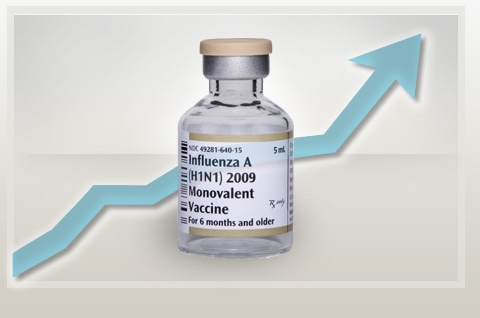
Can novel H1N1 swine flu be prevented with a vaccine?
Is swine flu (H1N1) a cause of an epidemic or pandemic in 2009?
What is the prognosis (outlook) for patients who get swine flu (H1N1)?
Where can I find more information about swine flu?
Updated timeline of H1N1 2009 swine flu news
Swine Flu (H1N1 Influenza Virus) At A Glance
Pictures of Swine Flu (H1N1) FAQ - Slideshow
Pictures of Bronchitis - Slideshow
Pictures of Strep or Sore Throat - Slideshow
Patient Discussions: Swine Flu - Concerns

Resource -MedcineNet.com

How Can I Prevent Swine Flu Infection?


*****The CDC recommends taking these steps:


· Wash your hands with soap and water, especially after coughing or sneezing; or use an alcohol-based hand cleaner.
· Avoid close contact with sick people.
· Avoid touching your mouth, nose, or eyes.


Got flu symptoms? Stay home and when you cough or sneeze cover your mouth and nose with a tissue. Afterward throw the tissue in the trash and wash your hands.


http://www.cdc.gov/H1N1flu/qa.htm = H1N1 Guidelines, Safety Precautions,Symptoms Etc.

Saturday, October 24, 2009

H1N1 Vaccine and Pregnancy


***Consult Your Physician ***

Then YOU can make the decision that is best for you and your family.

The flu has a dangerous history for pregnant women and their babies.
In fact it has long been known as a disaster for pregnant women.

Today we are faced with a dilemma to use or to decline the use of the H1N1 vaccine that is now available for us. First Responders , Healthcare Workers and their employers are seeking answers as quickly as possible. Everyone,this season is scrabling to do what is best for themselves and their families; considering the data that is available. Find out what are the medical recommendations given your medical situation;for prevention and/or treatment? Certainly the more information, combined with a medical consult, the better. At present,although these decisions are difficult for us it is to our advantage that we now have choices that were not available during the pandemics of 1918, 1957 and 1968.

Complications and deaths from flu were much higher among pregnant women and newborns in the pandemics of 1918, 1957 and 1968 than among the general population. This appears to indicate that expecting mothers are naturally more vulnerable to the flu and it's complications. In the 1918 outbreak, 27% of flu infections in pregnant women were fatal, compared with about 10% of overall flu cases worldwide.
The influenza pandemic of 1918-1919 killed more people than the Great War, known today as World War I (WWI), at somewhere between 20 and 40 million people. It has been cited as the most devastating epidemic in recorded world history. More people died of influenza in a single year than in four-years of the Black Death Bubonic Plague from 1347 to 1351. Known as "Spanish Flu" or "La Grippe" the influenza of 1918-1919 was a global . In the unusually severe 1918 pandemic, the miscarriage rate was an estimated 26% in women with uncomplicated flu and 52% in those with influenza and pneumonia, according to historical records. The rate of preterm birth was also about 50% in infected pregnant women.
Source:
http://virus.stanford.edu/uda/

A
study published in July in the Canadian Medical Assn. Journal examined 90 cases of H1N1 infection and use of Tamiflu http://www.drugs.com/pdr/tamiflu.html
with pregnant women and did not find a higher risk of birth defects than that seen in the general population.

According to the CDC {Center for Disease Control and prevention}http://www.cdc.gov/EID/content/14/1/95.htm
"Pregnancy has been a risk factor for increased illness and death for both pandemic and seasonal influenza. The increased risk is believed to be related to several physiologic changes that occur during pregnancy. Because of mechanical and hormonal alterations that occur during pregnancy, several changes also occur to the cardiovascular and respiratory systems, including increased heart rate, stroke volume, oxygen consumption, and decreased lung capacity."


Abstract:
"Planning for a future
influenza pandemic should include considerations specific to pregnant women.
First, pregnant women are at increased risk for influenza-associated illness and death.
The effects on the fetus of maternal influenza infection, associated fever, and
agents used for prophylaxis and treatment should be taken into account. Pregnant
women might be reluctant to comply with public health
recommendations during a pandemic because of concerns regarding effects of
vaccines or medications on the fetus. Guidelines
regarding nonpharmaceutical interventions (e.g., voluntary quarantine) also
might present special challenges because of conflicting recommendations about
routine prenatal care and delivery. Finally, healthcare facilities need to
develop plans to minimize exposure of pregnant women to ill persons, while
ensuring that women receive necessary care."


Reference the World Health organization for world wide concerns,plans and summits.
http://www.who.int/mediacentre/news/statements/2009/h1n1_20090429/en/index.html